

circular definition
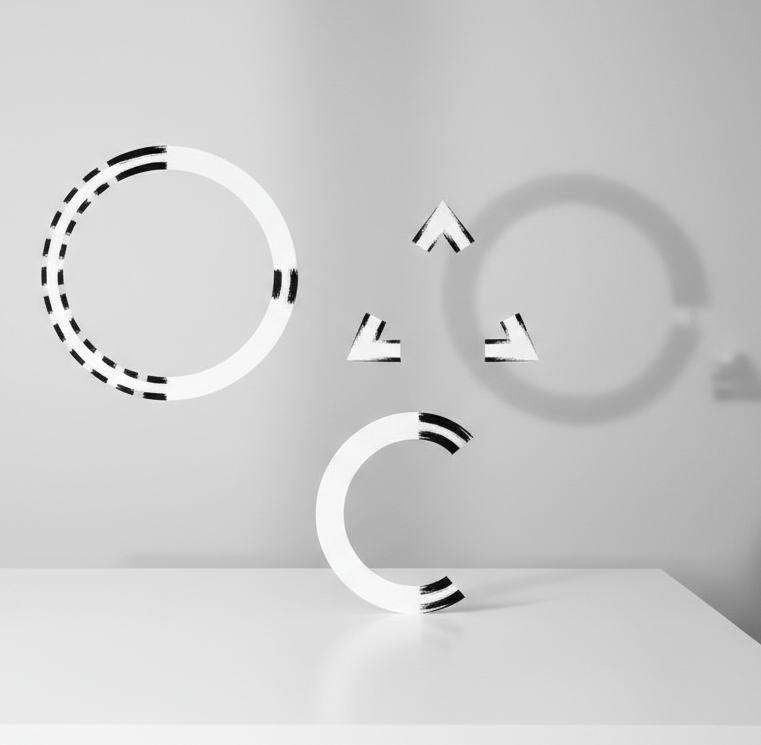
When you see a circle from just a few scattered points, your brain is performing a remarkable trick of science.
First, your visual system, starting with the primary visual cortex, detects those points as signals. Then, higher brain areas like the fusiform gyrus assemble those dots into a familiar shape: a circle.
This is a prime example of what psychologists call “Gestalt principles,” specifically the principle of “closure.” Your brain has this incredible tendency to “fill in the gaps,” turning incomplete snapshots into whole, meaningful forms.
Neuroscientific studies also point to “illusory contour” neurons in the primary visual cortex that respond when a shape like a circle is implied. These neurons help complete visual patterns by linking sparse points into perceived continuous forms via recurrent feedback between higher and lower visual brain areas.
It’s all part of the same survival trick that saved our ancestors — spot a face in the crowd, a shape in the shadows, and know instantly whether it’s friend, food, or threat. Still…