

a perfect circle
“A circle is a round straight line with a hole in the middle.” — Mark Twain
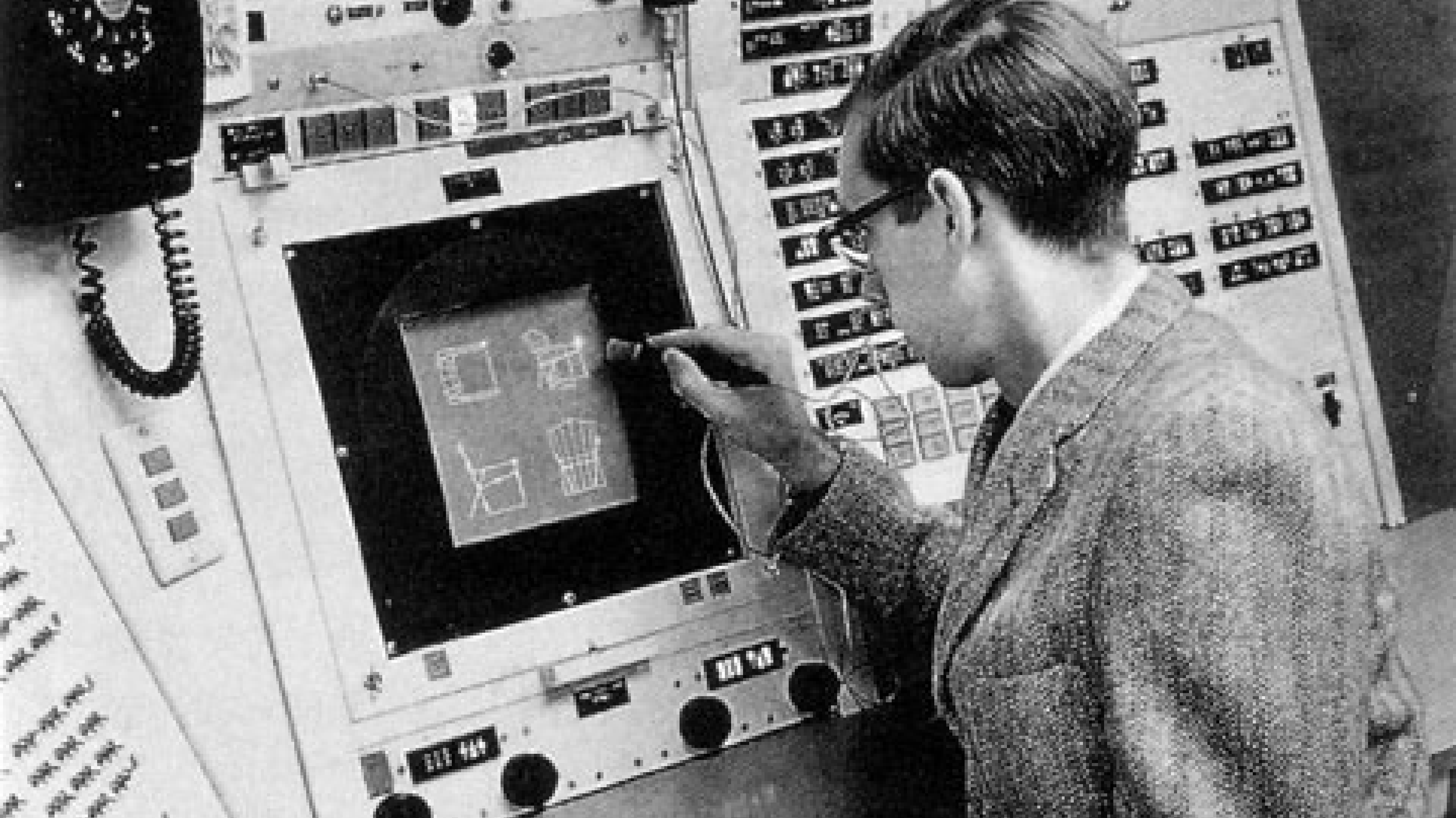
In the cold glow of MIT’s Lincoln Laboratory in 1963, twenty-something Ivan Sutherland sat with the room-sized TX-2 computer. He had an idea. Others didn’t think so. Drawing on a digital screen? Impossible.
Indeed Sutherland, armed with a light pen, was about to create the first time pixels came together to form a circle.
And it conjured a magical revolution. Sketchpad, a digital canvas where lines bent to human will, circles traced themselves with effortless grace, and shapes obeyed commands like living objects. This was new.
Sketchpad’s brilliance shone not just in interactivity, but in its visionary soul—introducing ideas decades ahead of their time. Now, objects carried relationships and rules, allowing a line to stubbornly stay parallel or a circle to remain perfectly round, no matter how they were stretched or moved.
Under the guidance of luminaries like Claude Shannon and Marvin Minsky, Sutherland’s thesis sparked entire fields: computer-aided design, 3D modeling, and virtual reality. Sketchpad was a bold, raw feast served when computers barely went beyond counting—and it still flavors every digital interaction today, born from the mind of a visionary who dared to redraw possibility’s limits.